• Web Design
Do I Need a Website or Is a Facebook Page Enough?
I get asked this a lot. The honest answer is you probably need both, but if you can only pick one, pick the website.
I get asked this a lot. Usually by small business owners who’ve been running everything through Facebook for years and it’s been working fine. Why bother with a website when you’ve already got followers?
It’s a fair question. And honestly, for some businesses, a Facebook page really is enough. But for most? You’re building on rented land.
You don’t own your Facebook page
Your Facebook page belongs to Facebook. Not to you. They can lock you out, throttle your reach, or change the rules at any time. It happens constantly. Accounts get flagged by automated systems, pages get hacked, and Meta’s support is basically non-existent.
Even without the worst-case scenario, Facebook controls how many people see your posts. And that’s changed massively over the years.
The reach problem
Back in 2012 or so, if you posted something on your business page, most of your followers would see it. Those days are long gone.
The average organic reach for a Facebook business page in 2026 is somewhere around 2-5% of your followers. So if you’ve got 500 followers and you post about your new spring menu, maybe 10 to 25 people will actually see it. Unless you pay to boost it, of course. Which is the whole point. Facebook is an advertising platform that happens to let you post for free.
Compare that to a website. If someone searches “florist near me” or “wedding flowers Bristol” and your website shows up, that’s someone actively looking for what you sell. They came to you. You didn’t have to pay to reach them, and you didn’t have to hope an algorithm decided your post was worth showing.
There’s another angle to this that people don’t always consider. Facebook’s algorithm favours content that generates engagement. Comments, shares, reactions. That means entertaining or controversial posts do well. Straightforward business updates about your services and opening hours? Not so much. You end up having to perform for the algorithm rather than just telling people what you do.
What people actually see when they search for you
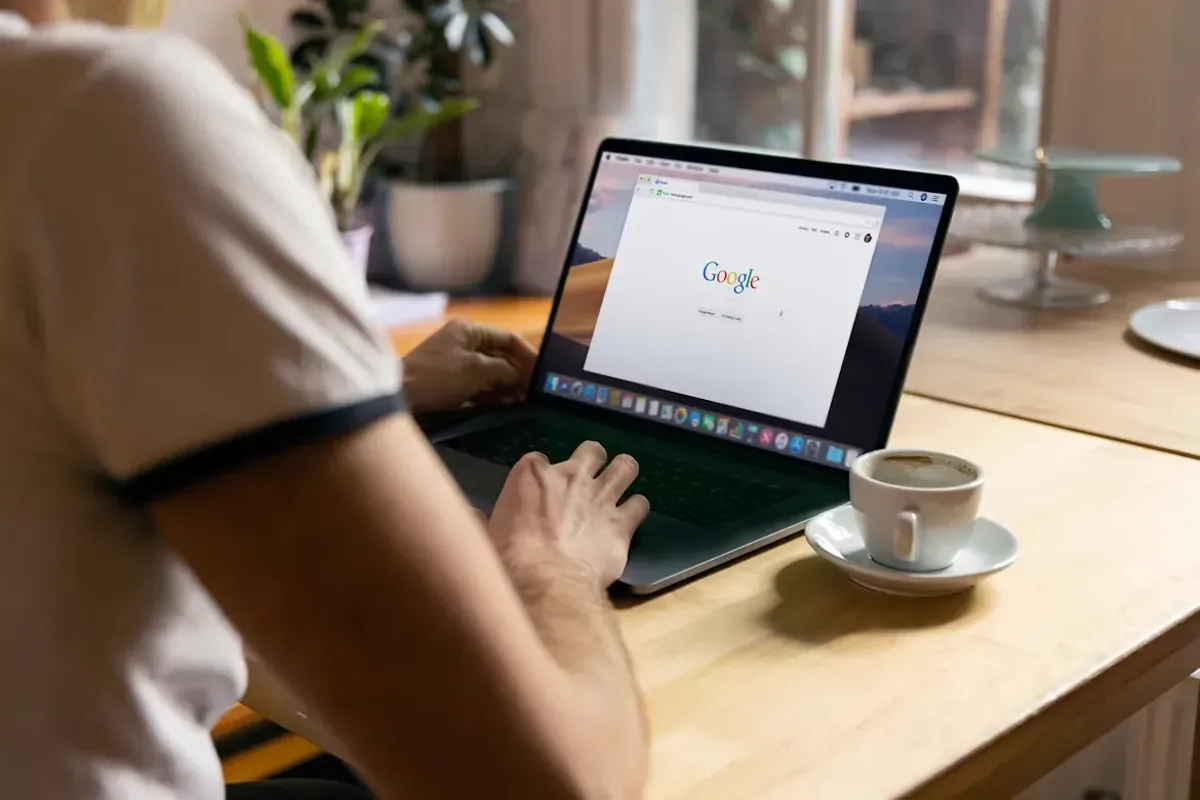
Try this right now. Open Google on your phone and search for your business name. Or search for what you do plus your town.
What comes up? For most businesses with only a Facebook page, the results are thin. Maybe the Facebook page itself appears (if Google decides to show it). Maybe a directory listing you forgot you created. Maybe nothing useful at all.
Now imagine a potential customer doing that same search. They’ve heard about you from a friend. They want to check you out before they call. And what they find is… a Facebook page that hasn’t been updated in three weeks, and some random results they don’t trust.
A website anchors everything. It’s the thing that shows up first, looks professional, answers their questions, and gives them a clear way to get in touch. It works alongside your Google Business Profile to make sure you actually appear when people are looking. I wrote about setting that up in my Google Maps guide, and the combination of those two things is genuinely powerful for local visibility.
Without a website, you’re basically invisible to anyone who isn’t already following you on Facebook. And that’s a lot of potential customers.
What Facebook genuinely can’t do
I’m not anti-Facebook. It’s a useful tool, and I’ll get to that. But there are things a Facebook page simply cannot do for your business.
Show up properly on Google. When someone searches for your type of business, Google shows websites, Google Business listings, and sometimes directories. Facebook pages do appear occasionally, but they rank poorly for local search terms and you’ve got zero control over how they display. You can’t optimise a Facebook page for search. You can’t add proper meta descriptions, target specific keywords, or structure your content for Google. If you want to appear when people search for what you do, you need a website. I’ve written about this in more detail in my post on getting your business on Google Maps.
Look professional to people who are checking you out. This one’s subjective, but I hear it constantly from business owners. When someone’s been recommended to you and they look you up, finding only a Facebook page sends a signal. It might not be fair, but the perception is “this business isn’t established enough for a proper website.” I talked about exactly this in my post about why small businesses still need websites. The decorator I mentioned there lost three jobs for this exact reason.
Give you any control over the experience. On your website, you decide what people see first. You control the layout, the colours, the order of information, the calls to action. On Facebook, your page looks like every other Facebook page. Your content sits alongside ads, notifications, and whatever else Facebook decides to put in front of your visitor. You can’t guide someone through a journey from “interested” to “enquiry.” They’re one notification away from being distracted.
Provide a proper contact experience. A website can have a contact form that sends you an email, captures the customer’s details, and confirms the message was sent. Facebook Messenger is fine for casual chat, but it mixes business messages with personal ones, notifications get lost, and you can’t easily track or follow up on enquiries. I’ve seen business owners miss paid work because a customer’s message got buried under family group chats.
When Facebook alone is genuinely enough
I promised I’d be honest, so here it is. There are situations where a Facebook page without a website is perfectly fine.
If you’re a hobby business that doesn’t need to grow. If you sell at local markets and your entire customer base is within your existing community. If you’re testing a business idea before committing any real money. In those cases, a Facebook page does the job.
I’ve also seen it work well for certain types of food businesses. A cake maker working from home, taking orders through Messenger, posting photos of her work. She had more orders than she could handle. She didn’t need a website because her customers found her through shares, tags, and local Facebook groups.
But notice the pattern there. Those are all situations where the business either doesn’t need to be found by strangers on Google, or is operating at a scale where word of mouth covers everything.
The moment you need new customers who don’t already know you exist, Facebook alone stops being enough.
What about Instagram? Or TikTok?
Quick aside, because I get asked this a lot. Everything I’ve said about Facebook applies to Instagram too (Meta owns both, same algorithm issues, same lack of ownership). TikTok is the same story with extra steps. You don’t own your audience on any social platform.
The businesses I see doing really well on Instagram tend to be in visual industries. Interior design, hairdressing, food, fitness. And they usually have a website too. Instagram brings the attention. The website closes the deal. If someone sees your work on Instagram and wants to book, where do they go? “Link in bio” only works if there’s actually somewhere decent to link to.
The “both, but website first” argument
Here’s what I actually recommend to most of the small businesses I work with: get your website sorted first, then use Facebook (and Instagram, and whatever else) to drive people back to it.
Your website is your home base. It’s the thing you own, the thing you control, the thing that shows up on Google. Social media is how you stay visible between searches. They do different jobs.
The cost concern is usually what stops people. “I can’t afford a website AND social media ads.” But a website doesn’t have to be expensive. I offer sites from £69/month with no upfront cost. That’s less than most businesses spend on boosted Facebook posts, and it gives you something permanent that actually belongs to you.
Think about it this way. Every Facebook post you’ve ever written lives on Facebook’s servers. If Facebook disappeared tomorrow (unlikely, but bear with me), all of that content goes with it. Your website? That’s yours. Your content, your customer relationships, your online presence. All under your control.
What I’d actually do
If I were running a local business right now, here’s my setup. A clean, simple website with my services, some photos, contact details, and maybe a few testimonials. A Google Business Profile so I show up on Maps. And a Facebook page where I post maybe once or twice a week, always linking back to my website for the important stuff.
I’d make sure my website had the basics covered: clear content on every page, a working contact form, and my phone number visible without scrolling. If the site wasn’t generating enquiries, I’d look at why that might be before blaming the platform.
The website does the heavy lifting. Facebook keeps things social. Neither replaces the other, but if I could only pick one, it’s the website every time.
My florist eventually got her Facebook back. She also got a website built the same month. She told me recently that she wishes she’d done it years ago. Not because Facebook stopped working for her, but because she realised how much she’d been relying on something she didn’t control.
If you’re weighing this up for your own business, I’m happy to give you an honest opinion on whether a website would actually make a difference. Sometimes the answer genuinely is “not yet.” But if you’re losing potential customers because you don’t have somewhere proper to send them, that’s worth fixing. Drop me a message and we’ll have a chat.
8 min read

Oscar Beamish
Freelance Web Developer, Bristol
I build custom websites and HTML5 banner campaigns for clients across the UK. 10+ years of experience, clients include Sony, Activision, and Riff Raff Entertainment (Jude Law). More about me →